BioBike(nee. BioLingua ) is a cloud-based, through-the-web programmable (Paas) symbolic biocomputing and bioinformatics platform that aims to make computational biology, and especially intelligent biocomputing (that is, the application of Artificial Intelligence to computational biology) accessible to research scientists who are not expert programmers. == Unique capabilities == BioBIKE is an integrated symbolic biocomputing and bioinformatics platform, built from the start as an entirely (what is now called) cloud-based architecture where all computing is done in remote servers, and all user access is accomplished through web browsers. BioBIKE has a built-in frame system in which all objects, data, and knowledge are represented. This enables code written either in the native Lisp, in the visual programming language, or systems of rules expressed in the SNARK theorem prover to access the whole of biological knowledge in an integrated manner. For its time (released in 2002) it was unique in permitting users to create fully functional biocomputing programs that run on the back-end servers entirely through the web browser UI. (In modern terms it was one of the first PaaS (Platform as a Service) systems, predating even Salesforce in this capability.) Initially this programming was carried out in raw Lisp, but Jeff Elhai's team at VCU, with NSF funding, created an entirely graphical programming environment on top of BioBIKE based upon the Boxer-style programming environments. Being a multi-headed, multi-threaded, multi-user, multi-tenancy cloud-based system, BioBIKE users were able to directly work together through their web browsers, remotely sharing the same listener and memory space. This permitted a unique sort of collaboration, discussed in Shrager (2007). A specialized offshoot of BioBIKE called "BioDeducta" includes SRI's SNARK theorem prover, offering unique "deductive biocomputing" capabilities. == Implementation == BioBIKE is open-source software implemented using the Lisp programming language. Continuing development takes place by the BioBIKE team centered at Virginia Commonwealth University . == History == BioBIKE was originally called "BioLingua", and was developed by Jeff Shrager at The Carnegie Inst. of Washington Dept. of Plant Biology, and JP Massar with funding from NASA's Astrobiology Division. Shrager and Massar wanted to create a web-based, multi-user Lisp Machine, specialized for bioinformatics. Other early contributors to the project included Mike Travers, and Jeff Elhai of VCU. Elhai obtained continuing funding from the National Science Foundation for the project, which was renamed BioBIKE. Elhai and colleagues added BioBIKE's unique visual programming language. Shrager, meanwhile, collaborated with Richard Waldinger at SRI to build SRI's (SNARK) theorem prover into BioBIKE, creating a deductive biocomputing system, called BioDeducta. == Instances == There used to be a number of BioBIKE verticals in different biological domains, including viral pathogens, cyanobacteria and other bacteria, Arabidopsis thaliana, and several others described in the references.
Feed forward (control)
A feed forward (sometimes written feedforward) is an element or pathway within a control system that passes a controlling signal from a source in its external environment to a load elsewhere in its external environment. This is often a command signal from an external operator. In control engineering, a feedforward control system is a control system that uses sensors to detect disturbances affecting the system and then applies an additional input to minimize the effect of the disturbance. This requires a mathematical model of the system so that the effect of disturbances can be properly predicted. A control system which has only feed-forward behavior responds to its control signal in a pre-defined way without responding to the way the system reacts; it is in contrast with a system that also has feedback, which adjusts the input to take account of how it affects the system, and how the system itself may vary unpredictably. In a feed-forward system, the control variable adjustment is not error-based. Instead it is based on knowledge about the process in the form of a mathematical model of the process and knowledge about, or measurements of, the process disturbances. Some prerequisites are needed for control scheme to be reliable by pure feed-forward without feedback: the external command or controlling signal must be available, and the effect of the output of the system on the load should be known (that usually means that the load must be predictably unchanging with time). Sometimes pure feed-forward control without feedback is called 'ballistic', because once a control signal has been sent, it cannot be further adjusted; any corrective adjustment must be by way of a new control signal. In contrast, 'cruise control' adjusts the output in response to the load that it encounters, by a feedback mechanism. These systems could relate to control theory, physiology, or computing. == Overview == With feed-forward or feedforward control, the disturbances are measured and accounted for before they have time to affect the system. In the house example, a feed-forward system may measure the fact that the door is opened and automatically turn on the heater before the house can get too cold. The difficulty with feed-forward control is that the effects of the disturbances on the system must be accurately predicted, and there must not be any unmeasured disturbances. For instance, if a window was opened that was not being measured, the feed-forward-controlled thermostat might let the house cool down. The term has specific meaning within the field of CPU-based automatic control. The discipline of feedforward control as it relates to modern, CPU based automatic controls is widely discussed, but is seldom practiced due to the difficulty and expense of developing or providing for the mathematical model required to facilitate this type of control. Open-loop control and feedback control, often based on canned PID control algorithms, are much more widely used. There are three types of control systems: open-loop, feed-forward, and feedback. An example of a pure open-loop control system is manual non-power-assisted steering of a motor car; the steering system does not have access to an auxiliary power source and does not respond to varying resistance to turning of the direction wheels; the driver must make that response without help from the steering system. In comparison, power steering has access to a controlled auxiliary power source, which depends on the engine speed. When the steering wheel is turned, a valve is opened which allows fluid under pressure to turn the wheels. A sensor monitors that pressure so that the valve only opens enough to cause the correct pressure to reach the wheel turning mechanism. This is feed-forward control where the output of the system, the change in direction of travel of the vehicle, plays no part in the system. See Model predictive control. If the driver is included in the system, then they do provide a feedback path by observing the direction of travel and compensating for errors by turning the steering wheel. In that case you have a feedback system, and the block labeled System in Figure(c) is a feed-forward system. In other words, systems of different types can be nested, and the overall system regarded as a black-box. Feedforward control is distinctly different from open-loop control and teleoperator systems. Feedforward control requires a mathematical model of the plant (process and/or machine being controlled) and the plant's relationship to any inputs or feedback the system might receive. Neither open-loop control nor teleoperator systems require the sophistication of a mathematical model of the physical system or plant being controlled. Control based on operator input without integral processing and interpretation through a mathematical model of the system is a teleoperator system and is not considered feedforward control. == History == Historically, the use of the term feedforward is found in works by Harold S. Black in US patent 1686792 (invented 17 March 1923) and D. M. MacKay as early as 1956. While MacKay's work is in the field of biological control theory, he speaks only of feedforward systems. MacKay does not mention feedforward control or allude to the discipline of feedforward controls. MacKay and other early writers who use the term feedforward are generally writing about theories of how human or animal brains work. Black also has US patent 2102671 invented 2 August 1927 on the technique of feedback applied to electronic systems. The discipline of feedforward controls was largely developed by professors and graduate students at Georgia Tech, MIT, Stanford and Carnegie Mellon. Feedforward is not typically hyphenated in scholarly publications. Meckl and Seering of MIT and Book and Dickerson of Georgia Tech began the development of the concepts of Feedforward Control in the mid-1970s. The discipline of Feedforward Controls was well defined in many scholarly papers, articles and books by the late 1980s. == Benefits == The benefits of feedforward control are significant and can often justify the extra cost, time and effort required to implement the technology. Control accuracy can often be improved by as much as an order of magnitude if the mathematical model is of sufficient quality and implementation of the feedforward control law is well thought out. Energy consumption by the feedforward control system and its driver is typically substantially lower than with other controls. Stability is enhanced such that the controlled device can be built of lower cost, lighter weight, springier materials while still being highly accurate and able to operate at high speeds. Other benefits of feedforward control include reduced wear and tear on equipment, lower maintenance costs, higher reliability and a substantial reduction in hysteresis. Feedforward control is often combined with feedback control to optimize performance. == Model == The mathematical model of the plant (machine, process or organism) used by the feedforward control system may be created and input by a control engineer or it may be learned by the control system. Control systems capable of learning and/or adapting their mathematical model have become more practical as microprocessor speeds have increased. The discipline of modern feedforward control was itself made possible by the invention of microprocessors. Feedforward control requires integration of the mathematical model into the control algorithm such that it is used to determine the control actions based on what is known about the state of the system being controlled. In the case of control for a lightweight, flexible robotic arm, this could be as simple as compensating between when the robot arm is carrying a payload and when it is not. The target joint angles are adjusted to place the payload in the desired position based on knowing the deflections in the arm from the mathematical model's interpretation of the disturbance caused by the payload. Systems that plan actions and then pass the plan to a different system for execution do not satisfy the above definition of feedforward control. Unless the system includes a means to detect a disturbance or receive an input and process that input through the mathematical model to determine the required modification to the control action, it is not true feedforward control. === Open system === In control theory, an open system is a feed forward system that does not have any feedback loop to control its output. In contrast, a closed system uses on a feedback loop to control the operation of the system. In an open system, the output of the system is not fed back into the input to the system for control or operation. == Applications == === Physiological feed-forward system === In physiology, feed-forward control is exemplified by the normal anticipatory regulation of heartbeat in advance of actual physical exertion by the central autonomic network. Feed-forward
Psychology in cybersecurity
The psychology of cybersecurity (often intersecting with usable security and cyberpsychology) is an interdisciplinary field studying how human behavior, cognitive biases, and social dynamics influence information security. While traditional cybersecurity focuses on hardware and software vulnerabilities, this discipline addresses the "human factor," which is exploited in cyberattacks. Psychology in cybersecurity draws from cognitive psychology and human–computer interaction. == History and evolution == The challenge of human behavior in computing was noted as early as the 1960s with multi-user mainframes like the Compatible Time-Sharing System (CTSS). In 1966, a software error on CTSS caused the system's master password file to be displayed to every user upon login—one of the earliest documented security incidents attributable to a combination of system design and human factors. These behaviors gained broader significance in the 1990s as the Internet became widely accessible. High-profile incidents involving figures like Kevin Mitnick demonstrated how human trust could be exploited through social engineering such as pretexting over the phone. == Cognitive and behavioral factors == Much of the psychology of cybersecurity focuses on decision-making under stress or uncertainty. Researchers apply frameworks like dual process theory to explain why humans fall for phishing or business email compromise. Threat actors design malicious communications to trigger fast, emotional "System 1" thinking—using urgency, authority, or panic, which prompts users to click a link or wire funds before their analytical "System 2" can assess the situation's legitimacy. Industry research has consistently documented the effectiveness of these techniques at scale, pointing to several recurring psychological phenomena that influence daily security practices: Cognitive biases: The optimism bias leads users to believe they are unlikely to be targeted by cybercriminals, resulting in lax password practices or delayed software updates. The availability heuristic causes individuals to focus on highly publicized, sophisticated threats while ignoring common, statistically probable risks like credential reuse. Social influence: Attackers leverage established principles of persuasion, such as those categorized by Robert Cialdini. Impersonating a CEO leverages the psychological trigger of authority, while fake tech support scams use reciprocity (offering to fix a problem before asking for network credentials). == Neurological and pre-cognitive factors == Functional magnetic resonance imaging (fMRI) studies show that neural activation in visual and attentional regions decreases with repeated exposure to the same stimulus, a phenomenon termed repetition suppression. Experiments have confirmed this effect in the context of security warnings: static warning designs produce declines in user attention and adherence. Information processing research on phishing indicates that affective cues, such as artificial urgency or fear, increase cognitive load and elicit automatic heuristic processing, reducing the likelihood of analytical evaluation and facilitating compliance with malicious requests. == Security fatigue and organizational dynamics == Aggressive cybersecurity postures can sometimes lead to mental and emotional exhaustion, a phenomenon known as security fatigue. === Alert fatigue === One example is alert fatigue, which most frequently affects both end-users and security operations center analysts. Continuous exposure to browser warnings or antivirus pop-ups, particularly those that are false positives, conditions users to dismiss alerts automatically due to the volume of notifications rather than their repetitive appearance (see § Neurological and pre-cognitive factors). The scale of this problem is significant in enterprise: SOC teams in large organizations receive thousands of alerts daily, and a survey published in ACM Computer Surveys found that analysts spend over 25% of their time handling false positives, meaning that malicious indicators can be buried in the noise. === Password fatigue === Similarly, password fatigue is the feeling experienced by many people who are required to remember an excessive number of passwords as part of their daily routine, such as to log in to a computer at work. Users cope with the memory burden by making predictable, iterative changes to their passwords (such as updating "Password01!" to "Password02!"), which decreases password security.
Seccomp
seccomp (short for secure computing) is a computer security facility in the Linux kernel. seccomp allows a process to make a one-way transition into a "secure" state where it cannot make any system calls except exit(), sigreturn(), read() and write() to already-open file descriptors. Should it attempt any other system calls, the kernel will either just log the event or terminate the process with SIGKILL or SIGSYS. In this sense, it does not virtualize the system's resources but isolates the process from them entirely. seccomp mode is enabled via the prctl(2) system call using the PR_SET_SECCOMP argument, or (since Linux kernel 3.17) via the seccomp(2) system call. seccomp mode used to be enabled by writing to a file, /proc/self/seccomp, but this method was removed in favor of prctl(). In some kernel versions, seccomp disables the RDTSC x86 instruction, which returns the number of elapsed processor cycles since power-on, used for high-precision timing. seccomp-bpf is an extension to seccomp that allows filtering of system calls using a configurable policy implemented using Berkeley Packet Filter rules. It is used by OpenSSH and vsftpd as well as the Google Chrome/Chromium web browsers on ChromeOS and Linux. (In this regard seccomp-bpf achieves similar functionality, but with more flexibility and higher performance, to the older systrace—which seems to be no longer supported for Linux.) Some consider seccomp comparable to OpenBSD pledge(2) and FreeBSD capsicum(4). == History == seccomp was first devised by Andrea Arcangeli in January 2005 for use in public grid computing and was originally intended as a means of safely running untrusted compute-bound programs. It was merged into the Linux kernel mainline in kernel version 2.6.12, which was released on March 8, 2005. == Software using seccomp or seccomp-bpf == Android uses a seccomp-bpf filter in the zygote since Android 8.0 Oreo. systemd's sandboxing options are based on seccomp. QEMU, the Quick Emulator, the core component to the modern virtualization together with KVM uses seccomp on the parameter --sandbox Docker – software that allows applications to run inside of isolated containers. Docker can associate a seccomp profile with the container using the --security-opt parameter. Arcangeli's CPUShare was the only known user of seccomp for a while. Writing in February 2009, Linus Torvalds expresses doubt whether seccomp is actually used by anyone. However, a Google engineer replied that Google is exploring using seccomp for sandboxing its Chrome web browser. Firejail is an open source Linux sandbox program that utilizes Linux namespaces, Seccomp, and other kernel-level security features to sandbox Linux and Wine applications. As of Chrome version 20, seccomp-bpf is used to sandbox Adobe Flash Player. As of Chrome version 23, seccomp-bpf is used to sandbox the renderers. Snap specify the shape of their application sandbox using "interfaces" which snapd translates to seccomp, AppArmor and other security constructs vsftpd uses seccomp-bpf sandboxing as of version 3.0.0. OpenSSH has supported seccomp-bpf since version 6.0. Mbox uses ptrace along with seccomp-bpf to create a secure sandbox with less overhead than ptrace alone. LXD, a Ubuntu "hypervisor" for containers Firefox and Firefox OS, which use seccomp-bpf Tor supports seccomp since 0.2.5.1-alpha Lepton, a JPEG compression tool developed by Dropbox uses seccomp Kafel is a configuration language, which converts readable policies into seccompb-bpf bytecode Subgraph OS uses seccomp-bpf Flatpak uses seccomp for process isolation Bubblewrap is a lightweight sandbox application developed from Flatpak minijail uses seccomp for process isolation SydBox uses seccomp-bpf to improve the runtime and security of the ptrace sandboxing used to sandbox package builds on Exherbo Linux distribution. File, a Unix program to determine filetypes, uses seccomp to restrict its runtime environment Zathura, a minimalistic document viewer, uses seccomp filter to implement different sandbox modes Tracker, a indexing and preview application for the GNOME desktop environment, uses seccomp to prevent automatic exploitation of parsing vulnerabilities in media files
Lost Art-Database
The Lost Art-Datenbank is an online database published by the German Lost Art Foundation (Deutsches Zentrum Kulturgutverluste. It contains information on cultural objects looted from Jewish collectors or transferred due to Nazi persecution during the Nazi era. Until 2015, it was managed by the Koordinierungsstelle für Kulturgutverluste (Magdeburg Coordination Office). == Creation == Following the Washington Conference of 1998, and the commitments to provide more transparency regarding looted art, Germany launched the Lost Art Database in 2000 order to help Holocaust victims and their families track down artworks that had been looted from them or lost due to Nazi persecution. == Functionality == The Lost Art Database lists art and books and other cultural objects that were lost, seized, stolen or forceably sold during the Nazi era. The database is divided into search requests from victims' families, heirs or institutions and "found" reports from cultural institutions on items with unresolved provenance gaps from the Nazi periods. The section on reports of finds lists objects that are known to have been unlawfully seized or relocated as a result of the war. In addition, reports are published here on cultural objects for which an uncertain or incomplete provenance may indicate a possible unlawful seizure or war-related relocation. The publication of reports in the Lost Art Internet Database is carried out on behalf of and with the consent of the reporting persons and institutions. The responsibility for the content of the reports lies with these legal or natural persons. There have been controversies over which items should be included in the database. Lost Art is based on the Washington Principles adopted in 1998, which Germany has committed itself to implementing (Joint Declaration, 1999). The Lost Art Database is considered a key resource in the search for looted art and the victims of persecution. Every item in the Lost Art Database has an identifier, known as a Lost Art ID. Proveana is the linked research database. == Other lost art databases == Other countries have launched databases to help identify Nazi looted art. Each database has its own area of focus. The German Lost Art Database allows families or heirs to submit information. Other countries have databases that focus on looted artworks that have not been found or artworks that were repatriated to the national authorities after the defeat of the Nazis but were never returned to their original owners. Other databases have been created for stolen antiquities, looted art from colonial era, art stolen from Syria, Iraq, Ukraine, or from museums or collectors.
Blobotics
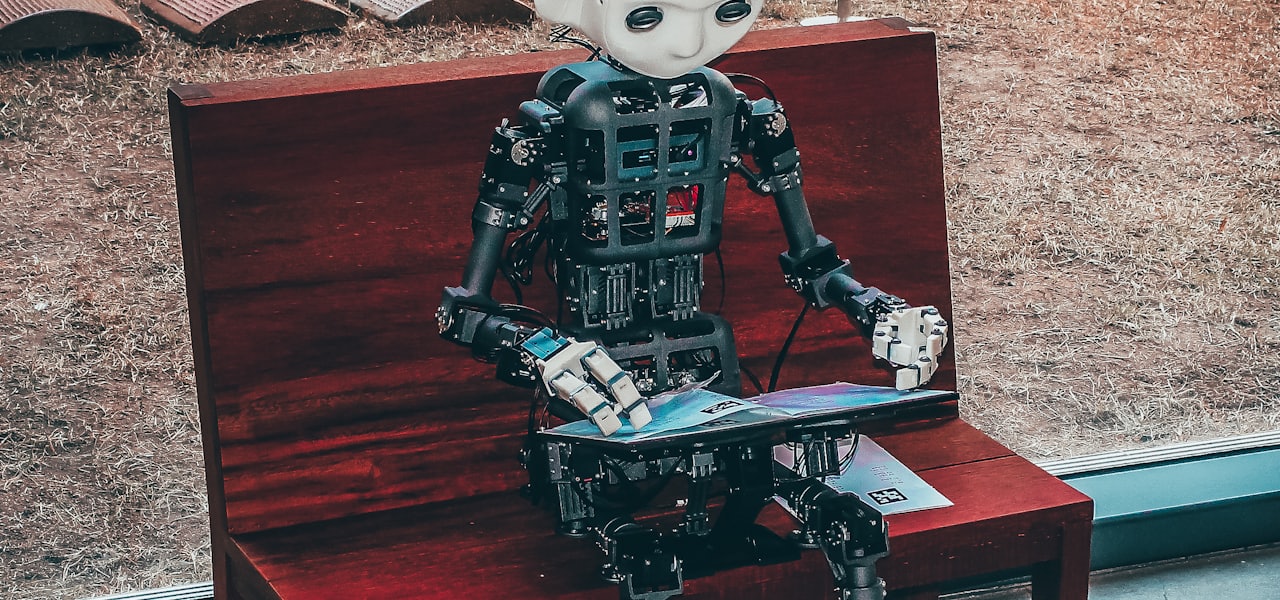
Blobotics is a term describing research into chemical-based computer processors based on ions rather than electrons. Andrew Adamatzky, a computer scientist at the University of the West of England, Bristol used the term in an article in New Scientist March 28, 2005 [1]. The aim is to create 'liquid logic gates' which would be 'infinitely reconfigurable and self-healing'. The process relies on the Belousov–Zhabotinsky reaction, a repeating cycle of three separate sets of reactions. Such a processor could form the basis of a robot which, using artificial sensors, interact with its surroundings in a way which mimics living creatures. The coining of the term was featured by ABC radio in Australia [2].
Variable data publishing
Variable-data publishing (VDP) (also known as database publishing) is a term referring to the output of a variable composition system. While these systems can produce both electronically viewable and hard-copy (print) output, the "variable-data publishing" term today often distinguishes output destined for electronic viewing, rather than that which is destined for hard-copy print (e.g. variable data printing). Essentially the same techniques are employed to perform variable-data publishing, as those utilized with variable data printing. The difference is in the interpretation for output. While variable-data printing may be interpreted to produce various print streams or page-description files (e.g. AFP/IPDS, PostScript, PCL), variable-data publishing produces electronically viewable files, most commonly seen in the forms of PDF, HTML, or XML. Variable-data composition involves the use of data to conditionally: exhibit text (static blocks and/or variable content) exhibit images select fonts select colors format page layouts & flows Variable-data may be as simple as an address block or salutation. However, it can be any or all of the document's textual content—including words, sentences, paragraphs, pages, or the entire document. In other words, it can make up as little or as much of the document as the composer desires. Variable data may also be used to exhibit various images, such as logos, products, or membership photos. Further, variable-data can be used to build rule-based design schemes, including fonts, colors, and page formats. The possibilities are vast. The variable-data tools available today, make it possible to perform variable-data composition at nearly every stage of document production. However, the level of control that can be achieved varies, based upon how far into the document production process a variable-data tool is deployed. For example, if variable-data insertion occurs just prior to output...it's not likely that the text flow or layout can be altered with nearly as much control as would be available at the time of initial document composition. Many organizations will produce multiple forms of output (aka: multi-channel output), for the same document. This ensures that the published content is available to recipients via any form of access method they might require. When multi-channel output is utilized, integrity between those output channels often becomes important. Variable-data publishing may be performed on everything from a personal computer to a mainframe system. However, the speed and practical output volumes which can be achieved are directly affected by the computer power utilized. == Origin of the concept == The term variable-data publishing was likely an offshoot of the term "variable-data printing", first introduced to the printing industry by Frank Romano, Professor Emeritus, School of Print Media, at the College of Imaging Arts and Sciences at Rochester Institute of Technology. However, the concept of merging static document elements and variable document elements predates the term and has seen various implementations ranging from simple desktop 'mail merge', to complex mainframe applications in the financial and banking industry. In the past, the term VDP has been most closely associated with digital printing machines. However, in the past 3 years the application of this technology has spread to web pages, emails, and mobile messaging.